

(Post 3C in a series. Click here to read from the beginning.)
Here are some other very helpful body-centered techniques that can gently invite your over-protective subconscious to “stand down.”
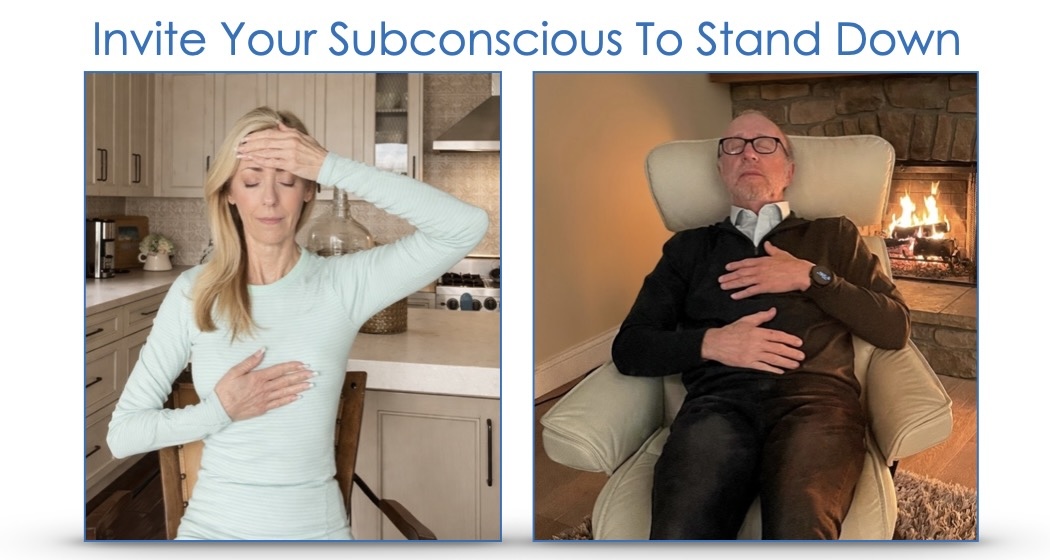
Hand on Hear and Forehead
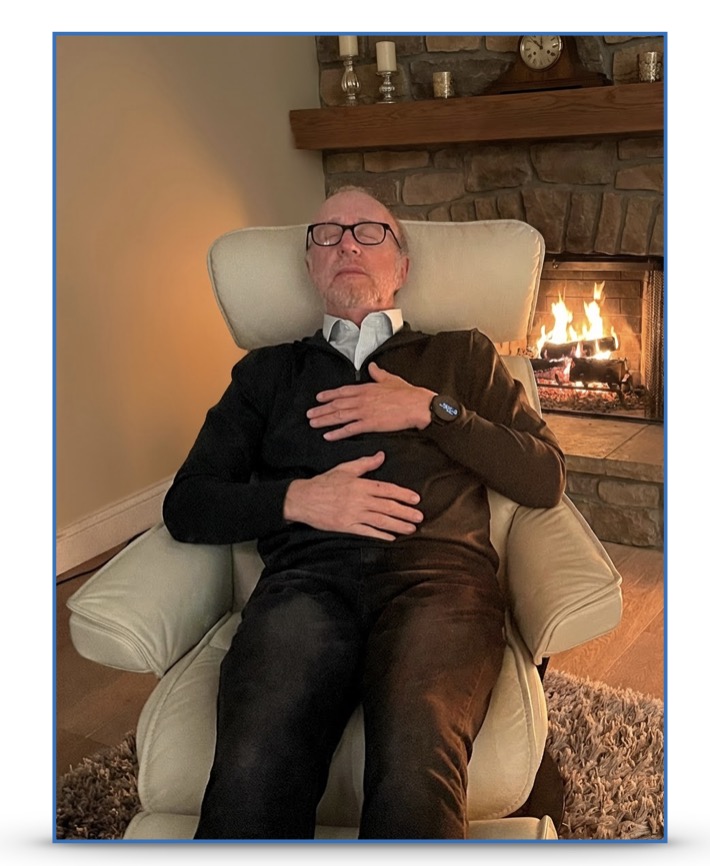
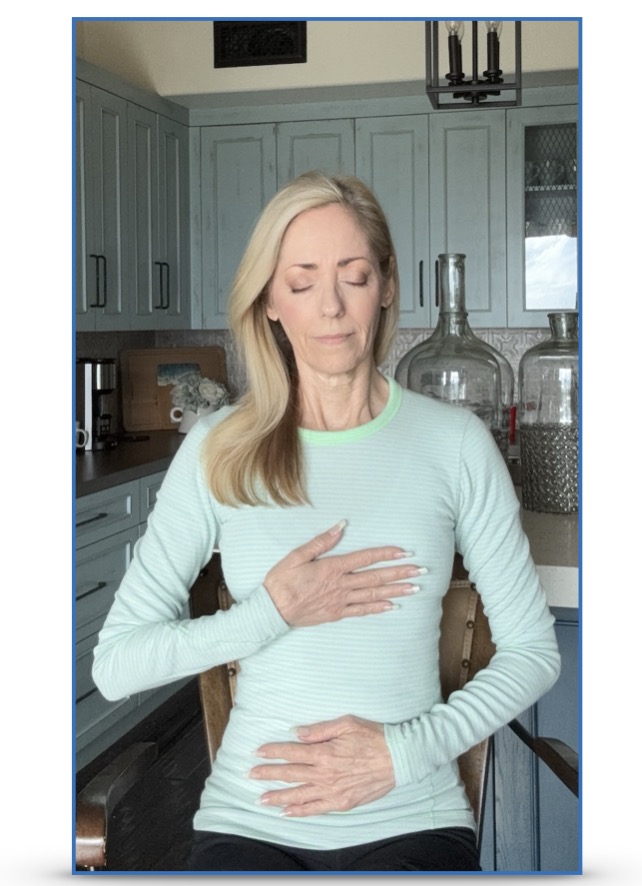
Place one of your hands on your heart and simply feel the rise and fall of your breath. Place your other hand on your forehead. Ideally, you will focus your attention on the sensations of warmth and pressure. Another option it to place one hand over your heart, and the other hand on your lower abdomen. Again, focus on the sensations of warmth and pressure.
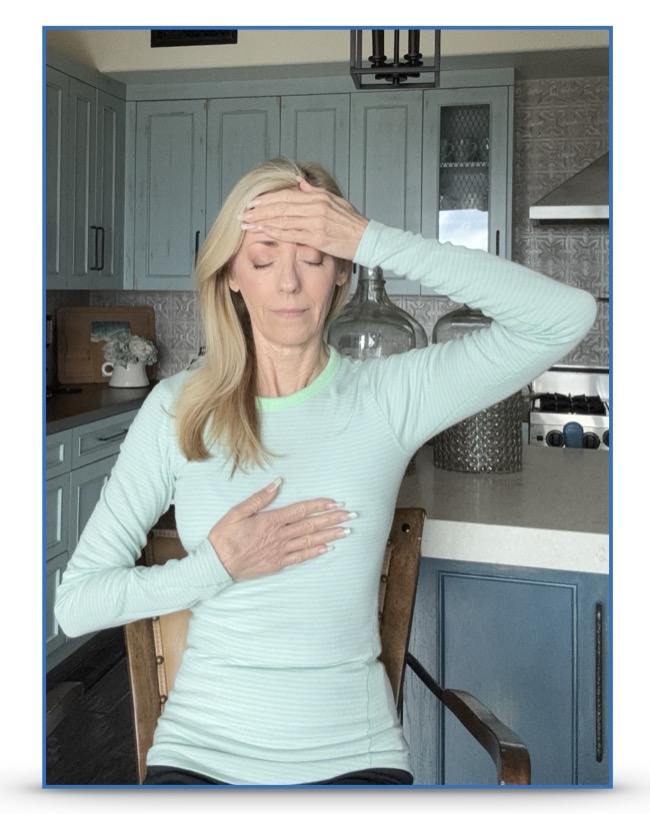
The forehead is rich in nerve endings, making it highly sensitive to touch. Placing your hand on your forehead is a well-documented self-soothing gesture that can help you to feel less scattered and send calming signals to the brain (including areas connected to the somatosensory cortex and the limbic system).
So, it can reduce nervous tension and it can help one to regulate their emotional responses. It can help your “thinking brain” . . . your “higher brain” to stay online while processing the emotional stressor.
It can also serve to reduce cortisol levels and encourage the release of calming chemicals like oxytocin and serotonin. Additionally, it can shift blood flow from the back of the head, where emotional, survival-based reactions occur, to the prefrontal cortex, which is responsible for rational thought and calming.
Placing your hand on your abdomen instead, can have similar calming effects. But it can also be quite grounding. Placing your hand on your abdomen further grounds the energy downward toward your “2nd brain” . . . the enteric nervous system.
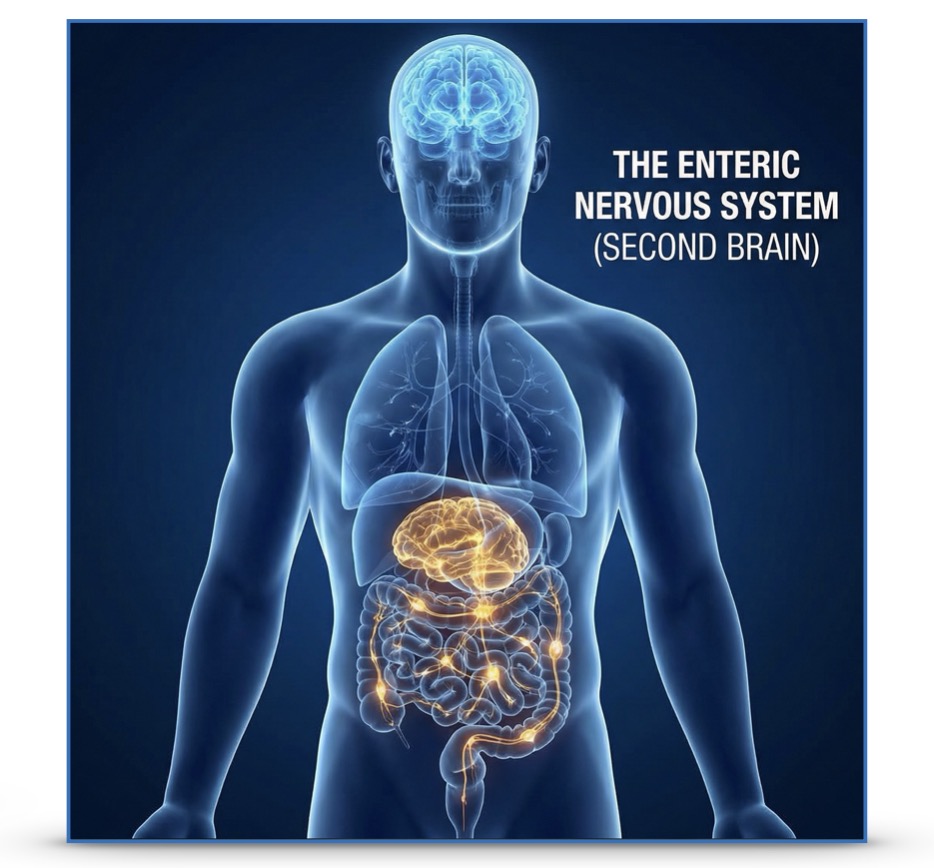
The enteric nervous system (ENS) is called our “second brain” because it is an extensive, independent network of over 100 million neurons embedded in the gut wall. It manages digestion autonomously,
communicates directly with the brain via the “gut-brain axis,” and therefore also influences emotions and health.
Just wait until you feel a “shift.” This might be a deep sigh, a spontaneous yawn, a little less tension, or a change in gut sounds/gurgling. Or, you may simply feel a little less “speeded up” or a little “quieter” in some way.
This shift is the physiological sign that your nervous system is re- regulating. But do NOT be concerned if you do not notice a shift. Just because you don’t notice it, doesn’t mean a shift hasn’t occurred. It doesn’t mean that your physiology hasn’t settled in some way. It may simply be too subtle for you to notice “in the moment.” But these small undetectable shifts can make a big difference, over time.
Extended Exhalation Breathing
Inhale naturally . . . exhale . . . extending the exhalation a bit longer than you might normally. When you come to the end of your exhalation, pause . . . push a little more air out . . . swallow . . . allow the next inhalation to simply cascade in.
There is no precise ratio for the length of the inhalation versus the length of the exhalation. What is most important is that your exhalation is longer than your inhalation. For example: Inhale for 4 seconds; Exhale for 8 seconds. Or, inhale for 3 seconds; Exhale for 6 seconds, etc.


When you inhale, your heart rate accelerates (sympathetic mode). Think of this it as small “sip” of energy. The Exhalation (Parasympathetic) is calming. So, we want to stay in the “sympathetic” mode for a shorter period of time, and we want to stay in the “parasympathetic” mode for a longer period of time.
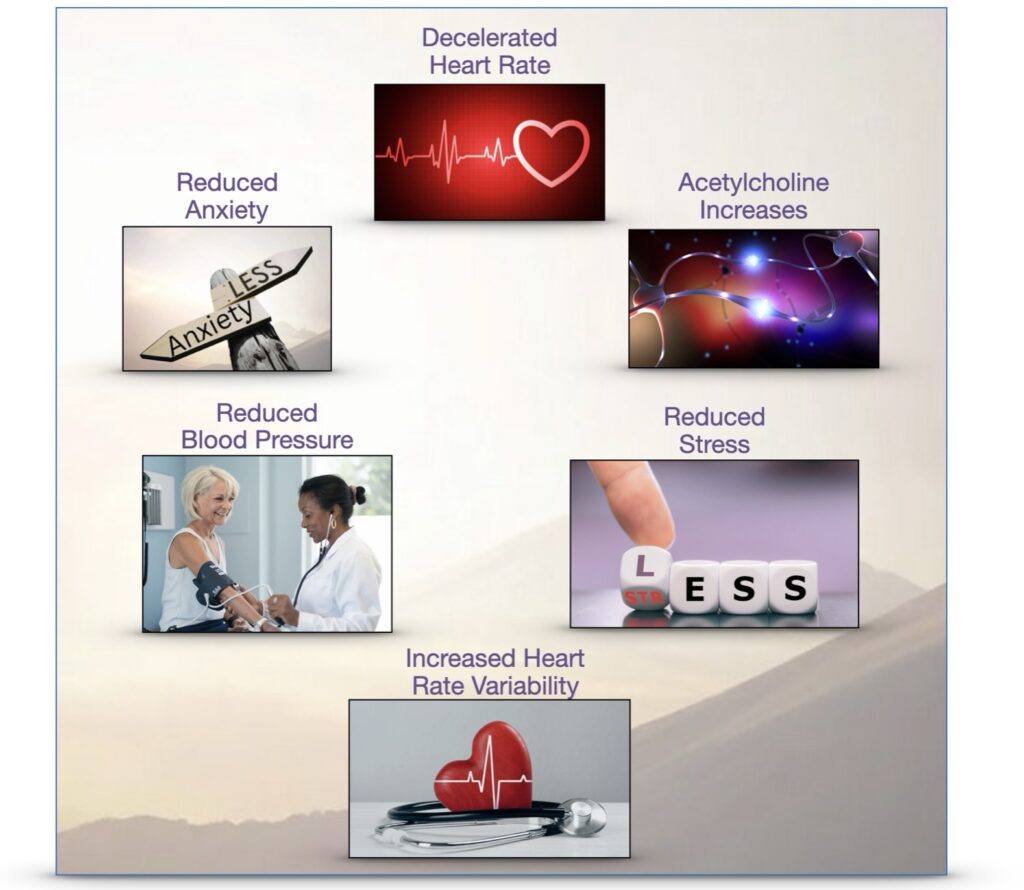
Sounds reasonable enough, doesn’t it? But there IS science to back up the impact of this Extended Exhalation Breath. It has been scientifically proven that a long, slow exhalation allows more acetylcholine (ACh) to affect the heart’s pacemaker. This results in a slower heart rate.
This scientific knowledge that the vagus nerve releases acetylcholine (ACh) upon activation is rooted in over a century of neurophysiological research. But more generally, this extended exhalation breathing has also been shown to reduce stress, anxiety, and blood pressure.
Now, if this was all there was to it, that would be enough, wouldn’t it? But scientific studies have shown that the extended exhalation breathing also increases heart rate variability.
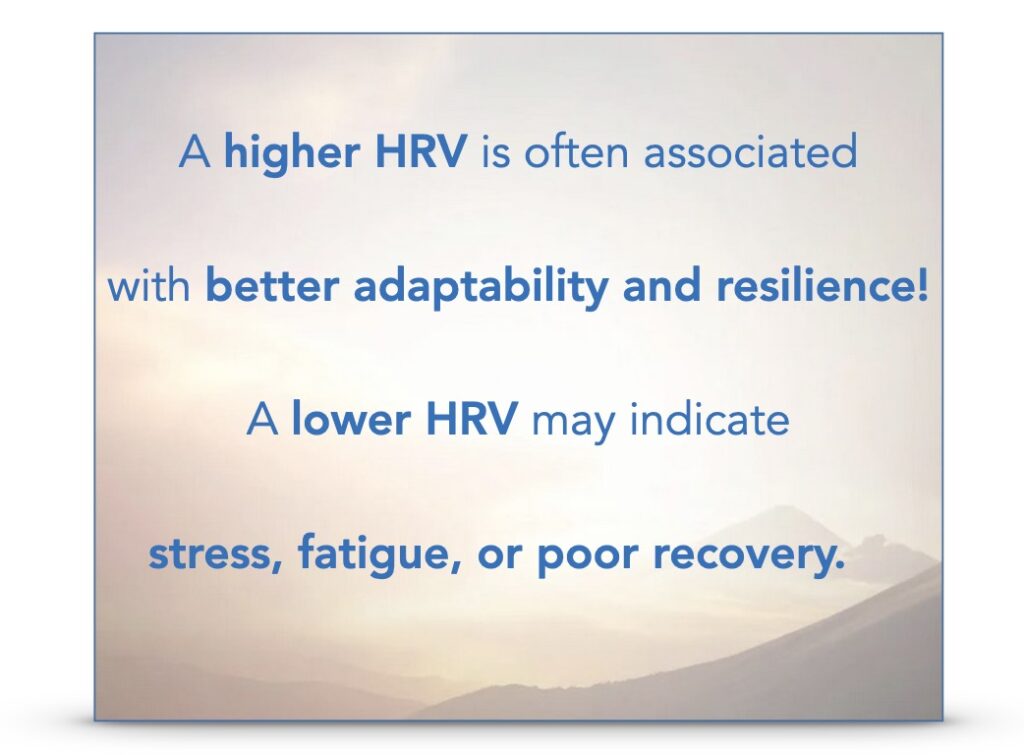
Did you know that a healthy heart does NOT beat like a metronome? It doesn’t tick away at a perfectly even pace. Your heart rate fluctuates with every breath you take. This variation in time between heartbeats is known as heart rate variability (HRV). HRV is a crucial indicator of your autonomic nervous system’s balance.
You now have some ideas about how to invite your over-zealous subconscious to “stand down.” You also have some body-centered ways of bridging the gap between your logical mind and your subconscious mind. You can mix and match in any way that you feel best serves you. But examples of how to mix & match will also be detailed in the following post.