
(Post 3B in a series. Click here to read from the beginning.)
The last post was all about, metaphorically speaking, NOT adding fuel to an already blazing fire! If one were trying to put out a blazing fire, one would not likely add kerosene.
When we resist the messages of our subconscious (when we disconnect from our physical body) we ARE adding kerosene, while, at the same time, trying to put out the fire. And when we judge ourselves, we ARE adding kerosene, while, at the same time, trying to put out the fire. So that is the first “order of business.” Do your best to NOT add fuel to the fire.

So now let’s move on to what we can do specifically, in the moment, when we realize that our subconscious is “up in arms” despite the lack of external threat! There are specific things we can do that serve to “bridge the gap” between our “logical mind” and our “subconscious mind.”
The subconscious often stays in overdrive because it is still perceiving threat. Though our subconscious speaks a different language than our logical mind, VERBAL LANGUAGE CAN BE USED. Verbal language DOES HELP us to consciously construct a mental framework that helps us perceive our environment as secure, predictable, and manageable. It can help bring us back to the present moment. It can “buy us time” so to speak, while the body “digest” the physical energy of the perceived threat.
Acknowledge and name the surge:
Simply verbalize, in your own mind, what you are observing in yourself. If you don’t do anything else, consider for now, that this is your No. 1 “staple.” The basic acknowledgement might sound something like this.
“I notice my body is preparing to protect me.”
If you find it helpful to also “name,” more specifically, what you are noticing, it might be something like this:
“I notice the tightness in my chest . . .”
“I notice my heart beating more rapidly . . .”
“I notice I am holding my breath . . .” or
“I notice my breath is shallow.”
State the current reality:
That means stating where you are . . . and what you are looking at . . . for example:
“I am in my living room . . . and I am looking at the beautiful wood carving that a friend made for me.”
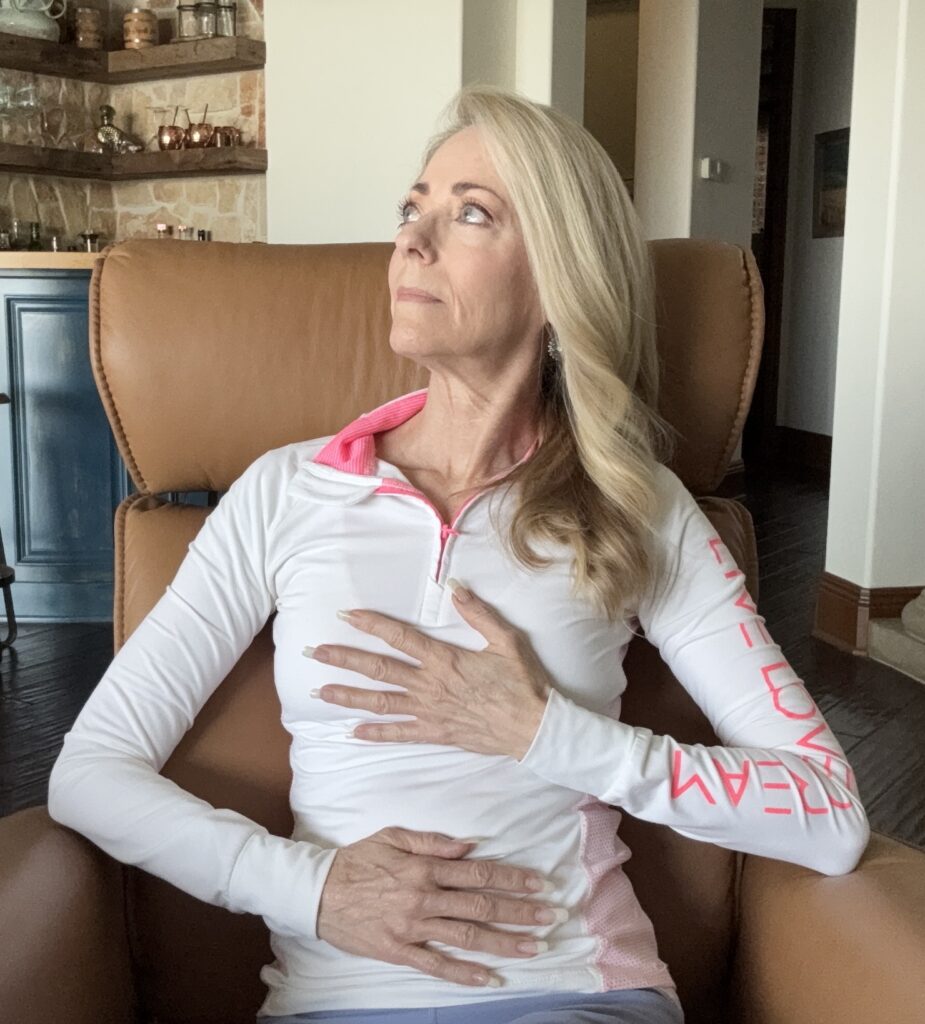
Remind yourself: This surge was meant for a different time.
“Right now, sitting in this chair–standing on this floor–I notice that I am physically supported.”
“Right now, it is safe for me to notice just one spot in my body that feels neutral or quiet”
(or at least more neutral or quiet than the distressed area).
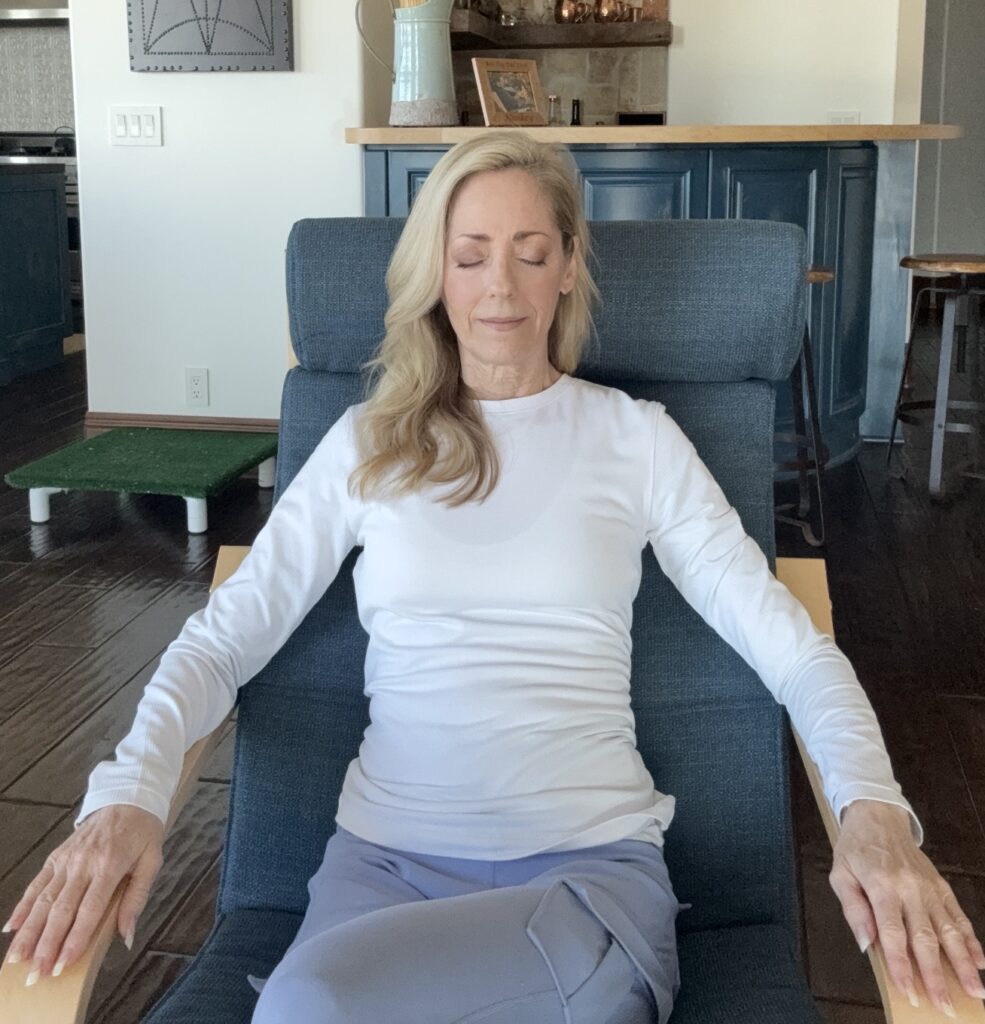
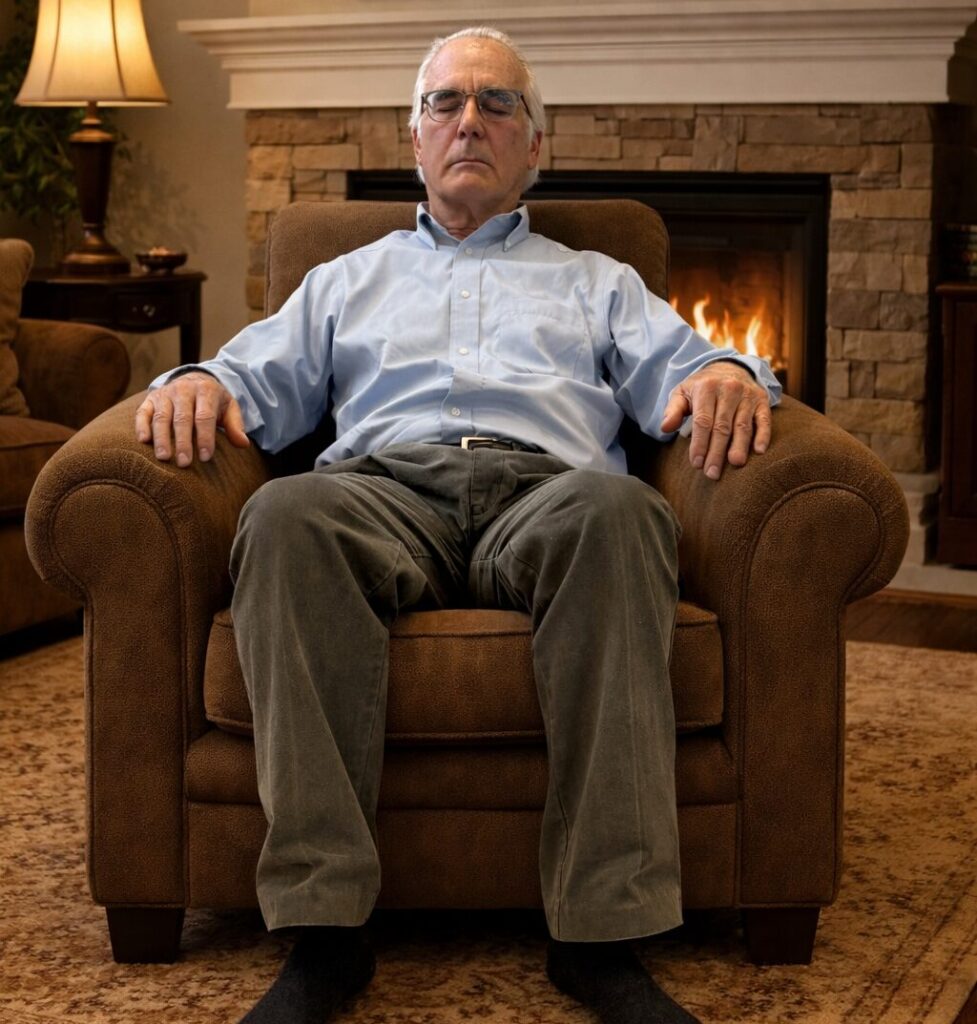
Re-orienting
This can help one move out of a defensive orienting response (scanning, in this case, for an internal threat) into an exploratory orienting response (which can help one return to equilibrium). Slowly let your eyes scan the room that you find yourself in. Find five objects of a particular color.

Or, find five different objects that have five different textures (e.g., this water bottle feels different from my iPhone . . . which feels different from this pillow . . . different from this candle . . . different from this rug. Actually, feel the different textures.

This moves our brain away from threat scanning (defensive orienting toward threat) to an external exploration of the environment. We become curious about our external environment which can help us return to a more balanced state. It also helps us to develop greater resilience in times of stress.
I am going to give you here, just one body-centered technique to do and I will give you several others in the next post. The reason I am giving you one now, is so that you can use it simultaneously with what I have suggested above. Or, you can use it as a “stand alone” technique to suggest to your subconscious that it is safe to “stand down.”
Self-Holding/Hugging Exercise:
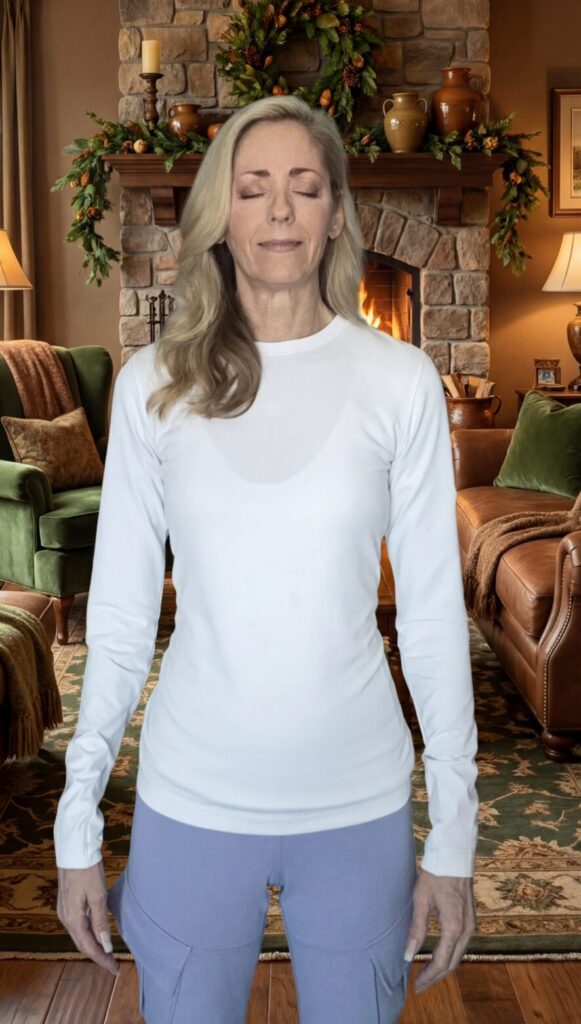
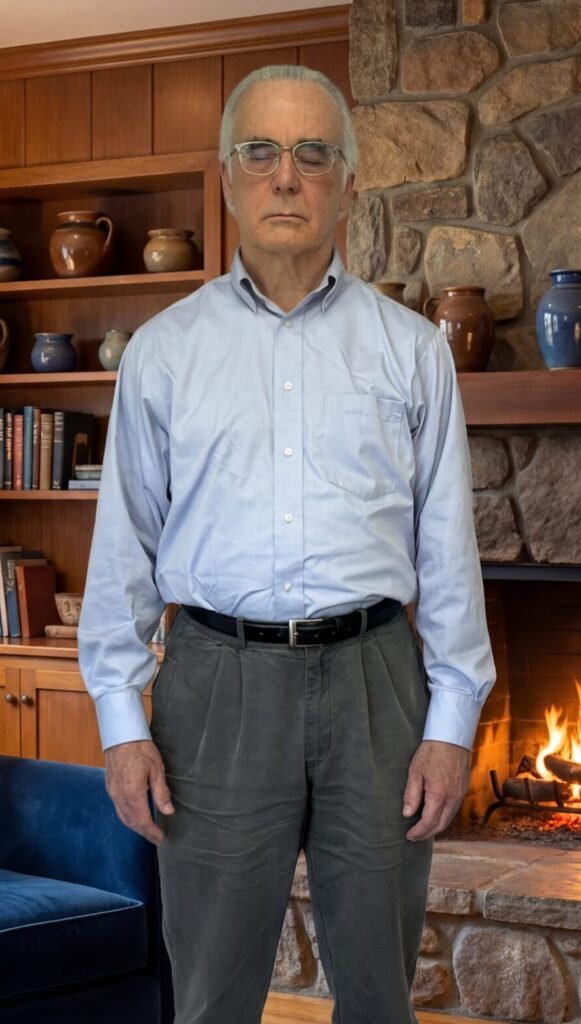
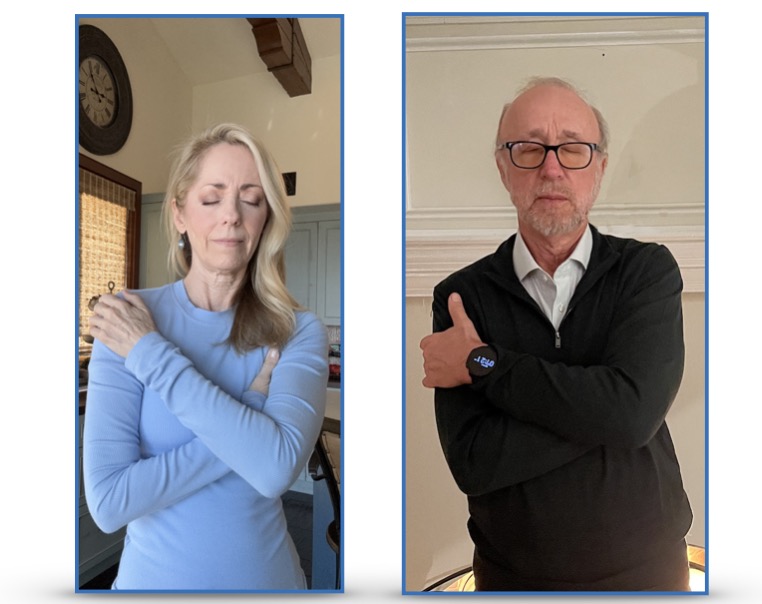
Place your right hand on the side of your ribs underneath your left armpit. Place your left hand, up high, on your right shoulder. Now imagine that you are helping yourself to hold or contain these uncomfortable sensations and feelings.
Feel the pressure of your hands against your body. And you might even sense some warmth underneath your hands. But even if you cannot sense this pressure or the warmth, this hold can help you to feel less overwhelmed with what you are experiencing, in the moment. This hold also creates a sense of physical boundary which can help one to feel “held,” . . . supported, and less scattered.
The sensations from the arousal or the emotions you are experiencing (for example fear or anger) might feel a little bit frightening in the beginning. This is because to date, we have never allowed ourself to stay with these feelings. We unconsciously split the sensations and feelings off from our conscious awareness.
But if we can use this hold, to just notice the sensations, with time, our bodies will expand a little bit. And this is what we need to teach our bodies to do. We need to give our bodies the time to expand. Why? Because doing so, takes us out of the state of the overwhelming helplessness, that we might be experiencing, as the result of the perceived, but unknown threat.
Now before I end this post, I want to add something very important. Some people may have certain limitations due to an injury. Some people may have some sort of chronic pain condition that keeps them from duplicating this hold exactly as they see it.
Please keep in mind that you can do these techniques lying in a bed. And you can actually do them in your imagination. So, you find the right way for you – a way you can sort of simulate the “hold.” Find some way to get as close to the hold as you can, given your present moment physical limitations.